Monday, April 12, 2010

Things That Make You Go Hmm

Russia's public diplomacy ostensibly aims to promote national culture and science, and to secure regional stability. But what about Russia's less public PD aims? This article argues that Russian media fueled the recent Kyrgyzstan uprising in pursuit of an unstated PD objective, namely consolidating power within the region.

As Paul Rockower asked not too long ago, how do you say "Hmmm" in Russian?

Cookies and Crowd Control

Evidently, the young women of Poland are a lot tougher than I thought. From a Washington Post article on Poland's mourning process:

Poland's strong mix of patriotism and grief was on display Sunday for the second day in a row, with a nation united in sorrow and pride mourning the death of President Lech Kaczynski and hailing him as a champion of their national identity... [T]ens of thousands of people, some weeping, lined the streets from the airport and crowded the city center to view Kaczynski's body being returned to the presidential palace, where it will lie pending funeral arrangements.

An elegant esplanade in front of the palace was so jammed that many could not move; police and girl scouts had to lock arms to prevent the crowd from destroying islands of votive lamps that have been flickering green, red and yellow since news of Kaczynski's death in a plane crash broke Saturday morning.

Thursday, April 8, 2010

Lost & Found in Translation

It's not exactly hot off the presses, but this Doonesbury strip from a few weeks ago has Jeff Redfern attempting to gather intelligence in (excrescent) Pashto. It gets at the heart of a few PD issues: lackluster U.S. attempts at polling--our foreign opinion polling budget is a fraction of the overall PD budget, and considerably lower than that of many transnational corporations--and language/cultural barriers that prevent any real progress on the ground. It's also telling that Jeff launches straight into his second, and even his third question before the elder answers the first. Asking the questions is a step in the right direction, but listening to the answers is even more important.

Of course, some people are genuinely interested in starting a dialogue. This post from the Sandbox (the military blog on Doonesbury's webpage) discusses a new Facebook page and the Afghani interpreters who launched it:

The interpreters are very important to our mission, adding the ability to communicate with and teach Afghans of all types. The Afghan National Security Forces are obviously key partners, and they need to be able to apply the principles of COIN* in their own country. It is, after all, their fight as well. They are the ones who are going to have to live here in the future.


It raises an important question for PD and all international communication. Who speaks and who listens, and how do we move towards a common understanding?

GOB Award: Qatar

Today's GOB Award (for the PD personality who's "made a huge mistake") goes to Mohammed Al-Madadi for not only smoking on a U.S. flight, but attempting to extinguish the flame on his shoes. The Qatari embassy official's questionable judgment understandably set off a few red flags and resulted in massive delays for his fellow passengers, who had to submit to additional security screening at the far end of their flight. Mr. Al-Madadi, for putting the "dip" in diplomat, this one's for you:

Wednesday, April 7, 2010

Russia's Public Diplomacy: Have You Ever Tried to Call the Russian Embassy?

The Russian Embassy welcomes you.


Not long ago, in the Huffington Post, John Brown lamented the difficulty of trying to reach the Chinese embassy in Washington, D.C. My own attempts to contact the Russian embassy have been similarly frustrating. I'm working on a paper about Russian PD in the United States, and I'd hoped to include some first-hand information on the embassy--so I decided to try to set up a meeting.

The embassy's website is in decent shape. The links work, the translations are good, the layout is modern, and the press releases in the "Latest News" section are all from this week. But every time I called the number on the website, I got a busy signal. I tried a number from an older website without much faith (it listed an incorrect address for the building) and found my doubt well justified. The phone rang. And rang. And rang. Eventually I hung up. Trying a different tactic, I called 411 and asked to be connected. After a brief pause, a fax machine started screeching in my ear. Clearly more decisive action would be necessary.

Today I decided to storm the embassy. Leaving my derelicte-style grad fashions in the closet, I dusted off my glad rags and set out for the Northwest quadrant.

The embassy is an imposing building, made all the more inviting by a thick iron fence. A barrier greets cars with the welcoming message: STOP. Undaunted, I marched up to the gate and pressed a buzzer. A voice greeted me in Russian. "Hi," I said. "Hello," said the voice. I explained that I'd like to speak with somebody at the front desk. There was silence.

I waited for a response, or for somebody to materialize and open the gate, or for a buzzer to sound, indicating that I could enter. Nothing. I waited a few minutes, strolled around the gate to see if there was another entrance, then tried again. This time, nobody even responded to the buzzer. After several long minutes in the balmy D.C. sunshine, I gave up and headed to campus.

The embassy, of course, is not the only destination for the PD-curious. A visit to the Russian Cultural Center a few weeks ago proved much easier. My colleague and I marched right up to the entrance and received a friendly tour. But it's not totally unreasonable to expect an embassy to open its doors--or is it? Mr. Brown questions whether U.S. diplomats and their Chinese counterparts are afraid to mingle with the natives, but the Closed Door Policy isn't simply the province of U.S. and Chinese embassies.

Monday, April 5, 2010

Who's Legit?

I spent this glorious weekend on the wrong side of a library (that is, the inside). But despite my disappointment at missing the beautiful April weather, I did get a lot of interesting research done. I'm currently working on a paper about U.S. radio broadcasting in Iraq and Afghanistan, and in the course of my research I stumbled across an article describing Duke Ellington's tour of the Middle East in 1963.

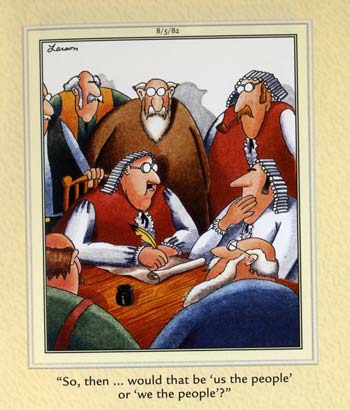
Although their shows were well attended, Ellington and his orchestra were disappointed to find that they were consistently playing for the nations' elites, and not for "the people," leading their sympathetic State Department handler to conclude that they had misunderstood the meaning of the word "people."

For the jazz musicians, the "people" were the working class men (and women) on the street. For the State Department, the "people" were the elites who were best positioned to help the U.S. government realize its foreign policy objectives abroad. Underneath these assumptions are questions about legitimacy. What makes a legitimate audience for public diplomacy? For the United States, the answer is often related to national security concerns. U.S. public diplomacy has traditionally been best funded during times when the nation perceived itself to be threatened (by Nazis, Soviets or terrorists, for example) and public diplomacy was seen as a tactic to counter opposition.

But by categorizing the people of foreign nations according to their legitimacy, or their utility, does public diplomacy not risk isolating vast segments of the population? And what does that reveal about underlying assumptions about those people and their culture? Somehow targeting specific segments of a society for message reception seems a little cynical and self-serving. At the very least, it seems less likely to succeed than working together with foreign publics to construct a message people in both countries can support.