Showing posts with label cross-cultural communication. Show all posts

Tuesday, April 27, 2010

It was more appealing when it had kittens...

Can't say I'm overwhelmed by M.I.A.'s new Born Free video, in which a group of American guards tromps through a dusty dystopia to round up a busload of unfortunate redheads and subject them to a bit of ultraviolence.

Musically, it's not her best by a long shot, and the video, skillfully directed by Romain Gavras has top-notch production values, but little to say about violence that hasn't already been covered by the hip-hop video medium.

You can take a gander below, but this is not even remotely safe for work--or any location that frowns upon nudity, violence or four-letter words.


M.I.A, Born Free from Romain Gavras on Vimeo.


It's a solid video, although I don't think I'd call it a "tough little masterpiece." Nonetheless, it's hard to look at this week without reflecting on Arizona's new immigration law. Unfortunately, I don't think any of the bill's supporters are going to be moved by the connection.

There's also the disturbing fact that anybody with passing knowledge of M.I.A.'s background knows of her connections to the Tamil Tiger rebels, although she's denied accusations that her work tacitly supports their cause. The video includes one scene involving a carrot-topped sect whose members have, like the Tigers, embraced violence as a means of resistance.

Ultimately, the video isn't complex enough to make a meaningful contribution to the problem it addresses. Which is a major issue with the Arizona bill as well. Fortunately, that bill is turning out to be as popular as sunburn, so there's hope that it may be overturned. While a stalwart few insist that the bill is necessary to counter the evils of illegal immigration, the bill has widely been decried as an unconstitutional racial profiling measure.

Illegal immigration has caused significant problems in the United States, most of which are borne by border states. Racial profiling is ineffective form of institutionalized racism. And genocide is a horrifying reality. None of this is news.

In the end, Born Free and SB 1070 suffer from the same shortcoming. Namely, they draw attention to an important problem, without offering any meaningful solutions on how to improve cross-cultural (or intra-cultural) communication.

Thursday, April 22, 2010

Lost in Translation


After a week of papers, posters and presentations, I'm in a burned out lazy mood this morning, so today's blog is little more than a shout-out to Engrish.com, one of my favorite sites, for regularly showing, with succinctness and flair, the importance of cross-cultural communication.

Thursday, April 8, 2010

Lost & Found in Translation

It's not exactly hot off the presses, but this Doonesbury strip from a few weeks ago has Jeff Redfern attempting to gather intelligence in (excrescent) Pashto. It gets at the heart of a few PD issues: lackluster U.S. attempts at polling--our foreign opinion polling budget is a fraction of the overall PD budget, and considerably lower than that of many transnational corporations--and language/cultural barriers that prevent any real progress on the ground. It's also telling that Jeff launches straight into his second, and even his third question before the elder answers the first. Asking the questions is a step in the right direction, but listening to the answers is even more important.

Of course, some people are genuinely interested in starting a dialogue. This post from the Sandbox (the military blog on Doonesbury's webpage) discusses a new Facebook page and the Afghani interpreters who launched it:

The interpreters are very important to our mission, adding the ability to communicate with and teach Afghans of all types. The Afghan National Security Forces are obviously key partners, and they need to be able to apply the principles of COIN* in their own country. It is, after all, their fight as well. They are the ones who are going to have to live here in the future.


It raises an important question for PD and all international communication. Who speaks and who listens, and how do we move towards a common understanding?

Monday, April 5, 2010

Who's Legit?

I spent this glorious weekend on the wrong side of a library (that is, the inside). But despite my disappointment at missing the beautiful April weather, I did get a lot of interesting research done. I'm currently working on a paper about U.S. radio broadcasting in Iraq and Afghanistan, and in the course of my research I stumbled across an article describing Duke Ellington's tour of the Middle East in 1963.

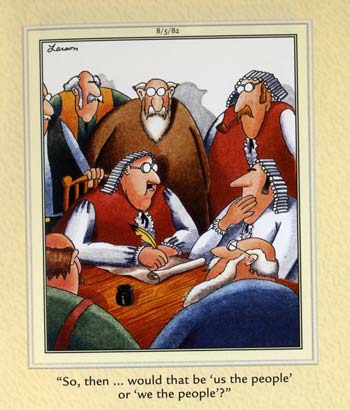
Although their shows were well attended, Ellington and his orchestra were disappointed to find that they were consistently playing for the nations' elites, and not for "the people," leading their sympathetic State Department handler to conclude that they had misunderstood the meaning of the word "people."

For the jazz musicians, the "people" were the working class men (and women) on the street. For the State Department, the "people" were the elites who were best positioned to help the U.S. government realize its foreign policy objectives abroad. Underneath these assumptions are questions about legitimacy. What makes a legitimate audience for public diplomacy? For the United States, the answer is often related to national security concerns. U.S. public diplomacy has traditionally been best funded during times when the nation perceived itself to be threatened (by Nazis, Soviets or terrorists, for example) and public diplomacy was seen as a tactic to counter opposition.

But by categorizing the people of foreign nations according to their legitimacy, or their utility, does public diplomacy not risk isolating vast segments of the population? And what does that reveal about underlying assumptions about those people and their culture? Somehow targeting specific segments of a society for message reception seems a little cynical and self-serving. At the very least, it seems less likely to succeed than working together with foreign publics to construct a message people in both countries can support.