We need to do a better job, frankly, of developing partnerships, farmer to farmer, leader to leader, explaining these benefits.So public diplomacy is part of our new approach. We have to focus on a rules-based and science-based system, but we also have to create new opportunities for empowering other nations in other parts of the world to assist us in carrying this message. It cannot just simply be a message carried by the United States. And so you look for countries in Africa and Asia and South America who are embracing this science, who explain to the friends and neighbors in their part of the world the benefits of it. Expanding exports is an important consideration.
And it also means developing relationships, as Jim Miller discussed. Our global food security initiative is not just simply about providing assistance to countries because it is the right thing to do. It is the smart thing to do because it creates relationships that in turn lead to ultimate business opportunities. So if you focus on protecting the market through food safety, if you put more research and development to allow farmers to be more productive and to protect their crops from pests and disease, you expand domestic markets and you increase export markets.
Sunday, February 21, 2010
Seeds of Diplomacy, Part II


Friday, February 19, 2010
Sowing the Seeds of Diplomacy
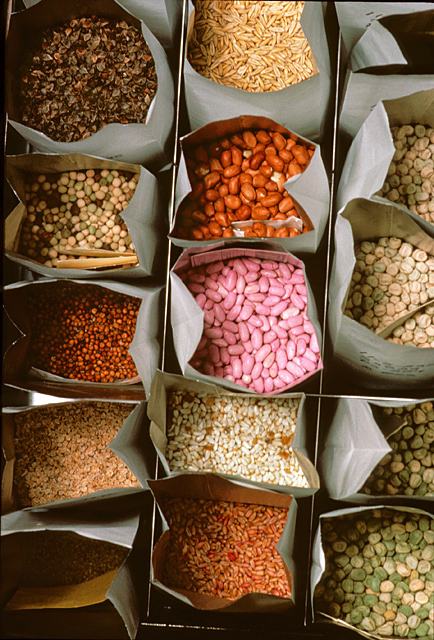 Not long ago, I derailed a casual conversation by mentioning the (entirely true) fact that a google search for my name and the words bovine diarrhea will return about 50 hits. This seeming non sequitur arose in response to the question of what I did before I become a full-time public diplomacy enthusiast -- which is write for the U.S. government. Specifically, I wrote articles about studies conducted by the USDA's Agricultural Research Service, for the catchily titled Agricultural Research magazine.
I bring it up because there seems to be a significant gulf between fish disease and foreign policy, but it occurred to me that there are some areas of overlap. The Agricultural Research Service (or ARS, as we like to call it) is involved in multiple international collaborations. From overseas labs to international research collaborations to cooperative screening efforts, ARS frequently engages with foreign nationals in the United States and abroad. The purpose of such collaborations is to benefit both participants, by allowing exchanges of personnel, equipment, experience and resources, and enabling people to work in environments that are particularly conducive to solving specific agricultural problems. The people involved aren't required to submit to a full-scale public diplomacy training course beforehand, but PD objectives (fostering goodwill, improving understanding of U.S. culture, etc.) are frequently achieved through these interactions. Science diplomacy has many such benefits, but it is not a panacea.
Last year in Seed magazine, Nina Fedoroff discussed some of the limits of science diplomacy and advocated for increasing engagement:
First, I think that all of us, particularly we Americans, need to become citizens of this boundary-less world without borders. We need to see, experience, and know the peoples and the problems of other nations. We need to recognize the complexity and interconnections among the challenges facing 21st-century humanity. And we need to understand — at a gut level — that all our fates are truly intertwined.
Then we need to stop moping and mobilize each other’s boundless ingenuity. We need to invent a science that will let us wrap our minds around the complex system that is our planet and its impressive passel of human activities. (And did you notice, science is a common language, hard evidence the agreed upon standard, a common, but unvengeful god.)
During the Cold War, science diplomacy was credited with supporting conversations about nuclear arms control. Today, the greatest threats to our country are different, and often (as Fedoroff notes) transcend borders. Science does provide a common language that can facilitate communication between countries, but whether it can improve understanding is another matter entirely.