Showing posts with label nation branding. Show all posts

Monday, June 27, 2011

Brand X

A thoughtful screed against branding asks how a focus on branding can limit the integrity of a message:

"When I was a hungry young reporter in the 1970s, I thought of myself as a superman, an invincible crusader for truth and justice — even though, looking back at old pictures, I now see that I resembled an emaciated weasel in unattractive clothing. My goals, however, were unambiguous, and heroic: 1) Get great stories that improve the world. 2) Get famous. 3) Get doe-eyed young women to lean in close and whisper, “Take me.”

Note the order. First came the work.

Now, the first goal seems to be self-promotion — the fame part, the “brand.” That’s because we know that, in this frenetic fight for eyeballs at all costs, the attribute that is most rewarded is screeching ubiquity, not talent."

Weingarten's column is specific to journalism, but the question pertains to nation branding as well.

Tuesday, April 12, 2011

The Eagle Has Branded

Source
The Greatest Movie Ever Sold is hitting cinemas soon, and Morgan Spurlock is doing his promotional tour. I haven't seen the film yet, but I caught an interview with Spurlock on the radio as I was driving in this morning and it piqued my curiosity.

Spurlock's primary target is corporate branding, of course, and film industry branding in particular, but I'd be surprised if the documentary doesn't have messages that are applicable to nation branding as well. One of the points he made this morning was that advertising is all but inescapable. So in a world where people are constantly bombarded by brands, what can branding campaigns do to succeed and how do they do it?

The premise reminds me of one of my favorite Czech documentaries, 2004's Czech Dream, which follows the process of two young filmmakers launching an elaborate advertising campaign for a product that never exists. If we believe that nations aren't simply geographic spaces, but imaginative spaces -- that is, that the United States isn't simply a large land mass sandwiched between Canada and Mexico, but the Land of the Free and the Home of the Brave -- I think both of these documentaries raise some good questions for national branders and PD practitioners: What is a brand? How is it promoted? And how does branding succeed in a savvy, saturated and suspicious environment?

No answers today, just lots of questions, but feel free to weigh in if you've got any ideas.

Monday, January 10, 2011

A Fair Day's Work

With my winter break drawing to a distressingly rapid close, I've been trying to cram in all the haymaking I can before the academic clouds gather.

One of the nice things about living near D.C. is that there's plenty of free entertainment in the form of museums, including the National Building Museum, which I visited last Friday. The museum is currently running an exhibition called "Designing Tomorrow: America's World's Fairs of the 1930s," and while the exhibit's focus is primarily domestic, it does have some public diplomacy significance.

World's Fairs, as Armand Mattelart has noted, are elaborate metaphors with global symbolic significance. The Fairs of the 1930s, set against the backdrop of the Great Depression and World War II, emphasized the role of science and consumerism for national ascendancy, themes that survived World War II and the Cold War and continue to influence public discourse today.  The exhibit's design is engaging and includes posters, still photographs, models and films--my personal favorite features a Typical American Family marveling at a wisecracking, cigarette-smoking robot named Elektro (portending, evidently, a future in which tobacco products are plentiful and Cs in short supply).


As the exhibit notes, "In the midst of the Great Depression and with Fascism on the rise in Europe, these fairs depicted a world of plenty and freedom--a hopeful vision of modern life in America. Civic leaders and businessmen hoped the fairs would stimulate local economies. Corporations were eager to showcase their products and have them associated with themes of a better future and an American way of life. And federal officials all the way up to President Franklin Roosevelt hoped to restore faith in the nation's economic and political systems."  

A museum blog offers more information about the Fairs' international aspects. World's Fairs and Expos continue to serve as tools of nation branding. However, the U.S. withdrew from the Bureau of International Expositions in June 2001, due to a lack of Congressional funding, and has not rejoined, leaving private enterprise to fill the void. The exhibit runs through mid-July and admission is free.

Wednesday, April 21, 2010

Nation-Branding: Don't Do It

In a recent article for the Economic Times, Simon Anholt critiques what he sees as indiscriminate use of the phrase "nation branding." Stationery logos are all well and good, he says, but you can't win hearts and minds with a swoosh. The key to improving a national reputation is to be reputable:
The message is clear: if a country is serious about enhancing its international image, it should concentrate on what it does and what it makes, rather than obsess about what it says or how it looks. There are no short cuts. Only a consistent, coordinated and unbroken stream of useful, noticeable , world-class and above all relevant ideas, products and policies can, gradually, enhance the reputation of the country that produces them.

In short, a nation's actions and exports should promote the reputation it wants to have. The rest is just window dressing.

Monday, April 19, 2010

On Russia, With Love

In the home stretch of a semester, many graduate students find they become strangers to their friends, their beds, the finer points of hygiene, etc. Among the many end-of-term projects isolating me from high society over the past few weeks has been a collaborative examination of Russia's public diplomacy with my friend and colleague Lena, which culminated in a presentation and paper, both completed this past week. Huzzah!

Among the many discoveries this project has yielded is this: I am ridiculously enthusiastic about public diplomacy and international communication. I get embarrassingly animated when describing my research, which I do with the sort of fervor people normally reserve for extolling the merits of their grandchildren or fail-proof pyramid schemes. So I'll try to restrain myself here in sharing some of the highlights of my paper:

In 2005, shortly after a Kremlin-commissioned survey showed that the items Americans most associated with Russia included communism, the KGB, snow and the mafia, the Russian government started pumping money into a PD revitalization effort.* One aspect of this effort has been an attempt to re-brand Russia as an innovative, democratic nation with a strong economy and rich cultural history. But despite a massive information machine, cultural exports, language and education programs, exchanges, consulates, cultural centers and impenetrable fortress embassies, Russia's global reputation remains fairly negative.

Attempts to establish a new national identity have been undermined by competing interests that pull Russia toward both the past and the future. More than anything, Russia struggles to shake off its Cold War image--partly because Cold War imagery still colors much media coverage of the country, but also because Cold War attitudes still shape its interactions with the West and its neighbors.

With all the wisdom and confidence of a graduate student who's never set foot in Russia, I offer three suggestions for improving Russia's global brand:
  1. Increase free information flows within the country, and offer more support to critical media and NGO groups.
  2. Increase transparency and stamp out corruption.
  3. Encourage public diplomats to promote stories and events that fly in the face of traditional Cold War narratives and confirm the "new Russia" identity.
For what it's worth, it couldn't hurt to dust off the welcome mat at the embassy either...

Sunday, March 28, 2010

The Paradox View

NationBranding.info offers some handy advice on branding your nation: Mine the paradox.

In an essay posted March 24, Saher Sidhom argues that "a country brand should start with a coherent brand and attitude but allow for paradoxes." Contradictions in cultural characteristics are inevitable, and highlighting them makes a nation's brand "more surprising and lively."

Sidhom cites Sweden as an example, noting that the country is progressive, but values preservation. Personally, I think a greater Swedish paradox is that their furniture looks sleek and basic, but tends to require an advanced degree in physical logic and a six-pack to assemble, but I am no expert in country branding, so I'll defer to Sidhom's judgment.

In general, I think Sidhom's advice is sound. Most nations and cultures do contain paradoxes, and it's better to acknowledge them upfront than to wait for your detractors to point them out, but it needs to be done with care and finesse. Otherwise you get something that looks like this:


There is some danger in defining a nation's characteristics according to its inconsistencies. But, of course, the act of reducing one's national character to a symbolic brand is an inevitably dangerous enterprise. As Shana Alexander notes, "the paradox of reality is that no image is as compelling as the one which exists only in the mind's eye."

Nation branders beware!

Wednesday, March 3, 2010

Cracks in Dubai Brand's Facade -- and Shark Tank

A recent report from Al Jazeera English describes Dubai's attempts to rejuvenate its brand in the wake of negative headlines. Mark Ritson, an Academic and Brand Consultant interviewed for the report, notes that Dubai "stands for modern; it stands for safe; it stands for luxury. Anything it does which is contradictory to that ... runs counter to that perception and therefore does damage to the perception of Dubai." Unfortunate, then, that Dubai's had a rash of bad press lately related to its murky economic prospects and some high-profile tourist destination snafus.

His recommendations for brand refurbishing: monitor brand perception and employ a crisis-management team. It's a short report, but well worth watching, if only to see the blurry havoc wreaked by a leaking shark tank in one of the world's largest shopping centers.

So what steps has the emirate's Brand Dubai office taken to mitigate the damage? Despite the fact that it was established to interact with international media and promote Dubai's image abroad (as reported in the Huffington Post and Arabian Business, among other sources, in June 2009), Brand Dubai declined to comment for the al Jazeera report. But don't imagine that BD is resting on its laurels! Here's a sampling of tweets the office has released over the past week:


Brand Dubai's tweets are short, sweet and steady, but the news that female students are recycling is unlikely to wrest the attention of the international press (or their readers) away from the news that Dubai's stock continues to plummet--or even from soft news topics with as much glamour as last week's marine mall mayhem. Rebuilding Dubai's brand is going to require an emphasis on the values on which it was originally founded. Safety, modernity and luxury are a good place to start.

Friday, February 26, 2010

Citizen Diplomats

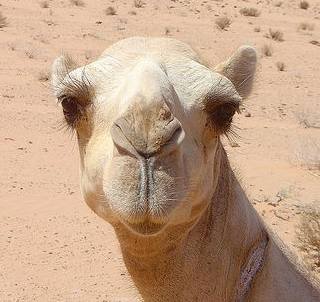
More from the news of nation-branding: In a new television campaign, Israel encourages its tourists to embrace citizen diplomacy when they travel abroad. In The Globe and Mail, Patrick Martin notes that the ads demonstrate "the Israeli government wants the world to know Israelis don't ride camels or eat only kebabs."

I'm all for citizen diplomacy, but I'd be willing to bet that among the sources for negative perceptions of Israel, "excessive dromedary transportation" and "stick-based comestibles" rank fairly low.

The ads expose an important element of nation-branding and public diplomacy in general: the need for targeted and specific outreach, based on authoritative and accurate knowledge of the target audience. Now these ads are aimed at Israeli citizens, but the ultimate targets of the diplomacy effort are non-Israelis with negative opinions of the country. They may succeed in raising awareness among citizen ambassadors, but whether heightened consciousness will translate into improved sentiment abroad is another matter entirely.

Public diplomacy is an incredibly important (and, in my opinion, under-utilized) foreign policy tools. I believe that PD, whether traditional or the "2.0" variety that uses interactive communications technology to engage foreign publics, is absolutely essential. But I also believe that it's significantly compromised when the methodology is not supported by 1) clear and valid foreign policy objectives, and 2) an understanding of the intended audience. I'll withhold judgment for the moment, but I'm not entirely sure Israel's hit the mark on this one.

Tuesday, February 23, 2010

News Bits

News from the world of public diplomacy shows that deep down inside, every nation just wants to be loved:

This Brand is Your Brand
: A Duke, a strongman and a kilt designer walk into a bar. Nope, not a joke. They're all part of Scotland's new nation branding campaign, which uses 14 "real Scots" to sell the nation's virtues to potential visitors. This effort has a definite tourist flavor to it, but political missions could potentially benefit from a similar strategy.

Spit and Image: Want to clean up your image? Use a handkerchief. There's "phlegm a-plenty" in this Chinese city, according to Al Jazeera's report, but authorities are cracking down on excessive expectoration in hopes of shining up their image before the Asian Games.

Love in the Time of Canada: At least one Canadian has been won over by Yankee friendliness at the Winter Games, citing the positive coverage of several U.S. commentators. Brownstein seems surprised that Comedy Central's Stephen Colbert has revised his opinion on the "ice-holes" and "syrup-suckers" to our North, but any devout member of the Colbert Nation knows its leader wants nothing more than for the rest of the world to love the United States as much as he does.

To Russia, with Love: The Heritage Foundation offers several tips for countering Russian anti-Americanism: 1) Use PD (and information and communication technology) to counter Moscow propaganda, 2) audit Russian info ops, 3) keep funding freedom- and democracy-promoting programs.

This Brand Was Made for You and Me

Today's topic is ripped straight from the discussion board of my Public Diplomacy class, with a special thanks to alert classmates F. Garcia, and K. Gwira for the links.

Our focus today is nation-branding, which, for the purposes of this blog post, refers to strategic efforts to define a country's image for foreign audiences. Please note that the objectives of nation-branding are not necessarily related to achieving foreign policy objectives, and are frequently related to attracting tourists or foreign developers. According to Mathias Akotia, CEO of the Brand Ghana Office, a brand is "a country’s identity that has been proactively distilled, interpreted, internalized and projected internationally in order to gain international recognition and to construct a favorable national image. A country brand strategy therefore is a plan for defining the most realistic, most competitive and most compelling strategic vision for the country."

Like college freshmen who dream of ditching their high school nicknames and starting anew, countries around the world are working to redefine themselves. So what countries are taking a stab at being BMOC, and how are they doing it?

Abu Dhabi: Fast cars and loose planning characterize the nation’s push for greater prominence. But skepticism remains about its ability to pull off the essential infrastructure- and recognition-building efforts.

Australia: Malcolm Long argues that nation-branding efforts in Australia are both essential to its success and poorly coordinated. Better cohesion could improve its economic and diplomatic outlook.

France: Many of you have already seen this article on the French government's efforts to export French culture to foreign audiences. According to the article, France spends about $1.4 billion every year on cultural and linguistic diplomacy. Ooh la la!

Kosovo: Time magazine describes a government decision to hire an advertising firm to re-brand the nation as a land of hot, young Europeans -- a sort of Baywatch for the Balkans. But the campaign is generating heat within Kosovo's own borders from young Kosovans who resent what they see as an inaccurate depiction.


And on a lighter note, the following were coined in response to a 2008 Washington Post contest to come up with humorous nation branding slogans.

  • Austria: No Kangaroos (John Alvey)
  • China: Come Visit Your Money (Ira Allen)
  • Greenland: Site of the 2060 Summer Olympics (J. Larry Schott; Elwood Fitzner)
  • Iran: World's Largest Non-American Theocracy (Ira Allen)
  • Tajikistan: Stan of Opportunity (Cy Gardner)

And my personal favorite:

  • England: Lie Back and Think of Us (Tom Murphy)

Full list available here.