Friday, December 17, 2010

Inaction: Loud and Clear

This is not even remotely funny, but I think that's his point. Last night, Daily Show host Jon Stewart lambasted Republican Senators for filibustering a bill that would provide health benefits for 9/11 first responders. As Stewart notes, "The party that turned 9/11 into a catch phrase, are now moving suspiciously into a convenient pre-9/11 mentality when it comes to this bill." Stewart also ripped the media for providing minimal to no coverage of the bill's troubles, noting that Al Jazeera had provided more information than many of the U.S.'s major networks:

The Daily Show With Jon StewartMon - Thurs 11p / 10c
9/11 First Responders React to the Senate Filibuster
www.thedailyshow.com
Daily Show Full EpisodesPolitical Humor & Satire Blog</a>The Daily Show on Facebook


This bill--which would provide medial benefits for the firefighters, police officers and other personnel that responded to the 9/11 attacks--has been mired in a political bog for months. The U.S. systems of checks and balances is one of its greatest strengths, but it can also be a significant weakness. And this particular situation, where petty partisan differences have trumped domestic values, is a perfect example of why. The Senate's failure to pass this bill shows divisive leadership, narrow-minded politics and a refusal to actively support frequently professed values. An often overlooked element of public diplomacy is the way that domestic policies are perceived by foreign publics, and it's hard to regard this particular policy in a way that reflects positively on U.S. leadership.

That American comedians and foreign-owned news stations are the most prominent advocates for 9/11 first responders suggests a breakdown within the nation's political and media systems. In this case, inaction speaks louder than words.

Wednesday, December 8, 2010

Un-American Books

Greetings, manICateers. No doubt there's much been rending of garments and wailing and gnashing of teeth due to my extended absence from the blogosphere, for which I apologize. A combination of a hellacious virus and an equally grueling finals season have kept me away from the blog for a while, but I'm hoping to pick up again over the winter break.

Today's topic comes courtesy of the New York Times, thanks to alert reader (and fellow blogger) Jaxiecracks. The article discusses the crusade of foreign cultural institutes and publishers to get American readers to pick up books from their countries.
Hoping to increase their minuscule share of the American book market — about 3 percent — foreign governments and foundations, especially those on the margins of Europe, are taking matters into their own hands and plunging into the publishing fray in the United States. Increasingly, that campaign is no longer limited to widely spoken languages like French and German. From Romania to Catalonia to Iceland, cultural institutes and agencies are subsidizing publication of books in English, underwriting the training of translators, encouraging their writers to tour in the United States, submitting to American marketing and promotional techniques they may have previously shunned and exploiting existing niches in the publishing industry.

This isn't simply a marketing gimmick, but a cultural diplomacy strategy, one that underscores a major difference between U.S. diplomacy and that of other countries--namely, the U.S. tendency to overlook culture in general. As John Brown argues in "Arts Diplomacy: The Neglected Aspects of Cultural Diplomacy," the United States does not promote its high culture abroad the way other countries do. This could be a result of national psychology--a remnant of puritanical heritage that sees art as an indulgence--but the end result is that USPD tends to emphasize education over culture, which is why the CIA had to conduct covert high culture ops during the Cold War. U.S. pop culture has the strength of the market behind it, but high culture--like foreign literature--lacks that support.

As a recovering English major whose foreign literature collection takes up significantly more than 3 percent of her shelves, I support this push for literature diplomacy. Some things will inevitably be lost in translation, but I think there's a lot more to be found.

Sunday, November 7, 2010

Dilution Diplomacy

Run a quick google search on "diplomacy" (go ahead, I'll wait), and you'll see that journalists and bloggers are finding plenty of new applications for the term. Alongside traditional and public diplomacy, we see evidence of "ballet" diplomacy, "cupcake" diplomacy, "wedding" diplomacy, even "designer" dress diplomacy.

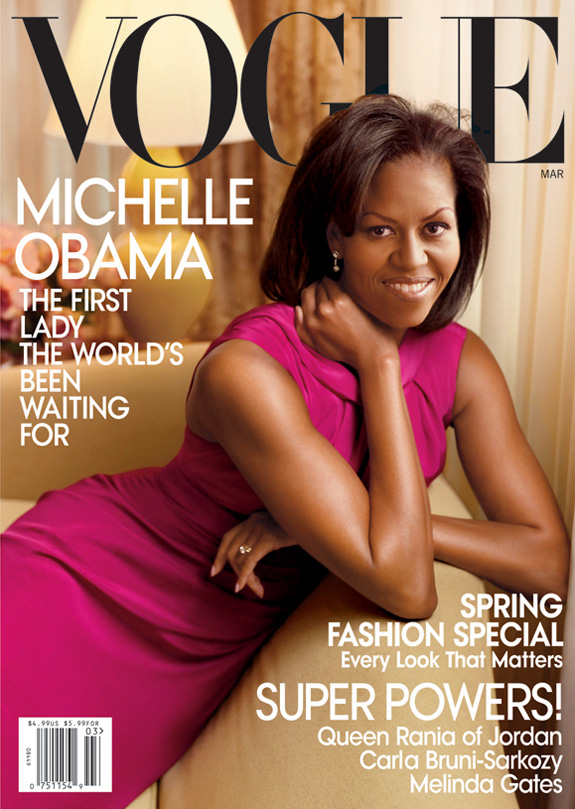
For many, it seems, "diplomacy" refers not to international negotiations or even "the art of letting someone have your way," so much as to a friendly gesture between two parties. While some of these diplomatic efforts are targeted to generate goodwill between countries, I don't think anybody expects the Indians to be so dazzled by Michelle Obama's new shoes that they'll rush to blindly sign every form President Obama throws in front of them.

There are limits to all forms of diplomacy.

Friday, November 5, 2010

The New Wave

Some of you may remember that I wrote a paper last year on free information flows and attitudes toward the United States. I was trying to find a relationship between information freedom and successful public diplomacy, but the most influential factor in how countries viewed the United States seemed to be the president. Attitudes about the United States shifted dramatically when Obama replaced Bush.

Chalk it up to frustration with Bush or optimism about Obama--many pundits have. But it's fair to say that opinions of Obama (both foreign and domestic) have also changed over the past two years. Early this week I wondered what effect Republican domination of the House would have on foreign attitudes. While that's not yet clear, it is fair to say that the political shift is already affecting how Obama presents various political issues.

Today the Washington Post reports that Obama is recasting environmental policy to emphasize its economic benefits, and the New York Times notes that Obama's trip to Asia is being reframed to emphasize jobs creation. Both efforts appear to be aimed to appease the new politicians and the constituents who voted them into power, but it's worth noting that no president ever exclusively addresses a domestic or a foreign audience, particularly in the age of international cable, mobile technology and high-speed Internet.

The new M.O. for American politics seems to be domestic growth, but it will be interesting to see how this message plays abroad.

Thursday, November 4, 2010

A Time to Dance

A number of news organizations are reporting the first performance of the American Ballet Theatre in Cuba since 1960.

ABC News: "Call it ballet diplomacy. Last night, 35 American dancers performed pirouettes and leaped across a stage in a theater in Cuba named for Karl Marx, bridging a political divide that hadn't been crossed in half a century."

Reuters: "This visit is the latest attempt at cultural  diplomacy between the two ideological foes as they search for common ground after five decades of hostility."

Hmmm... Seems a little enthusiastic to me. I'm all for mixing tutus and diplomacy, but I think the BBC News' take was a little more realistic: "While relations between the US and Cuba are showing signs of thawing, the US administration has yet to signal an end to their lengthy trade embargo of the island."

Wednesday, November 3, 2010

IraQVC : Oversell Edition

The AP questions the limits of U.S. traditional diplomacy, asking: "Is US overselling diplomacy in Iraq?"

The article cites a State Department audio concluding that the Obama administration may be overstating the impact of U.S. diplomats there, and that diplomatic work may be harder to pull off without military backing or protection. It quotes Stephen Biddle of the Council on Foreign Relations saying, "Normally, stabilizing a situation like this requires peacekeepers ... Peacekeepers are soldiers. That doesn't say there aren't important and valuable things that government civilians can do. But ... security protection is important in this environment, and that's not something State Department civilians do."

The concerns highlight one of many differences between the U.S. approach in Iraq and Afghanistan, where, as this blog recently reported, the U.S. is trying to mix military action and political dialogue. There is, after all, great wisdom in the infamous Will Rogers quote: "Diplomacy is the art of saying "Nice doggie" until you can find a rock." That is to say, words carry more weight when backed by strength.

Iraq may not be the "graveyard of empires," but with a relentless stream of scandals--from Abu Ghraib and Blackwater to mismanaged funds and the UN's oil-for-food scandal--Iraq has presented itself as a formidable public diplomacy challenge, a situation that has not been aided by the ambiguity of what, exactly, the U.S. was trying to communicate there. Was it an anti-WMD message? A pro-democracy message? A demonstration of force against terrorism? A show of solidarity with Arabs?

Traditional and public diplomats alike are going to struggle to communicate in the years ahead. It's unclear how much the presence of the military would help, but it's certain that their absence will add one more challenge to an already difficult task.