Tuesday, October 19, 2010

Chuck Norris Diplomacy

Over at the Washington Post, David Ignatius reports that General David Petraeus is "supplementing his primary mission as military commander [in Afghanistan] with the 'warrior-statesman' role he had in Iraq, where he was able to fuse the political and military elements of the campaign."

In other words, Petraeus is mixing coffee talk with special ops, combining military and diplomatic efforts to increase pressure on the Taliban while facilitating dialogue between the terrorist organization and the Afghan government.

According to Ignatius, "With Petraeus in the political-military driver's seat, he can steer a process to push the disparate Taliban groups toward a political settlement. The diplomatic side of this game depends on Petraeus's ability to pound those who resist -- with devastating firepower."

Teddy Roosevelt would certainly approve of this speak-softly-and-beat-your-enemies-with-a-big-stick approach. But does military aggression supplement or undermine diplomatic outreach? No doubt the results depend on the circumstances, and in Afghanistan there's not enough evidence to say one way or the other. Hopefully this "diplomacy with a punch" will ultimately prove to be a successful strategy.

Monday, October 18, 2010

It's a Brand New Day...


The Moscow Times reports that Russian President Dmitri Medvedev is using video blogs to promote his international agenda.

According to the Times, "This strategy has the advantage of publicly identifying laudable foreign policy objectives. It provides a direct channel of communication with broad audiences in the target states and Russia... [Medvedev] is rallying international and domestic support behind his positions— and thus campaigning for leadership at home and abroad, boosting his self-esteem. But there is a downside to the video-blog diplomacy. It could turn out to be a high-stakes bet, front-loaded with risks of failure, especially when taping a video blog predates strategy development."

The Times fails to comment on the negative potential of social media oversharing--recently made clear to Russia by the explosive Wormgate story--to say nothing of the crushing embarrassment of being less popular than exploitative tripe like David after Dentist.

But let's focus on that last sentence for just a second, and substitute just about any sort of hard power or soft power effort for the phrase "taping a video blog." Surely every attempt at promoting foreign policy is destined to fail when it preempts strategy--a lesson some US foreign policy strategists could stand to remember as well.

Sunday, October 17, 2010

Beefing Up Sri Lanka's Image

Not satisfied with traditional diplomacy methods, Sri Lanka is reportedly pumping up its image with the aid of PR Firms.

Sri Lanka's Sunday Times reports that the government is paying UK firm Bell Pottinger about 30,000USD per month to promote Sri Lanka in the United States and about 20,000USD to another firm in India. Sri Lankan papers question whether the money is well spent and whether it's necessary to outsource such a domestic service. But there's little information about the ends, means and impacts of the effort.

And (without attempting to malign the efforts of Don Draper and his colleagues) how effective can a PR campaign be when a nation's domestic turmoil is attracting negative attention from the United Nations and the United States--one of the countries targeted by this campaign?

So, pop stars and PR aren't exactly working out. Maybe it really is time to give peace a chance?

Thursday, October 14, 2010

Peace and Conflict

I realize I was just patting China on the back a few days ago for clever public diplomacy, but I think they've botched it up this time. Clearly, China's response to the receipt, by Liu Xiaobo, of the first Nobel Peace Prize to be won by a Chinese national has exposed an underlying conflict within the country.

On the one hand, the award is an honor. But Liu Xiaobo is a poster child for human rights and pro-democracy dissent in China, and the award draws negative attention to human rights abuses in China. The government's initial response was to repress the news, with a major media and Internet censorship campaign, which merely served to highlight the nation's lack of free speech. Underlying this entire response is a disconnect between China's belief in national sovereignty and its desire to gain prestige within the international system by adhering to international norms (such as those laid out in the Universal Declaration of Human Rights, of which China is a signatory).

China has shown itself to be adept at resisting international pressure in the past. As China is a non-democratic government, its leaders are not subjected to electoral accountability. Dissidents are prevented from voicing their views. And the nation's geopolitical and economic significance make it immune to some of the external pressures that might influence less influential countries. Despite China's adherence to communist politics, the nation is economically tied to many capitalist countries and corporations, and has a thriving economy. Its economic strength hinders trade partners from applying much pressure to the country, as was the case when the Clinton administration attempted to link trade and human rights conditions.

It's long been acknowledged that China's human rights track record doesn't exactly mesh with the UDHR philosophy, and this new prize is the latest situation to bring that problem into the harsh glare of an international spotlight. China has resisted international pressure in the past, but schisms between words and action can impede public diplomacy and soft power in general by undermining a nation's credibility. It's unlikely that the Peace Prize will create a radical shift in China's domestic human rights policy--but the government's response thus far hasn't done it any favors. Even a small shift, for example, not suppressing media reports of the prize, would go a long way towards improving China's human rights image.

Monday, October 11, 2010

Tweeting for Peace

Like many people, I've been concerned about negative and pessimistic reports from the current round of Middle East Peace Talks. I spent a good chunk of the weekend reading up on the Middle East for class, and one of the themes I took away from the reading is that interpersonal relationships are critically important at the highest levels of international negotiations.

In fact, to hear Jimmy Carter tell it, the story of the Camp David Accords is impossible to understand without appreciating the luncheons and presents and friendly conversations that built their foundation.

So you can imagine my relief when I saw this article. Yes, my favorite Tweeter is in the Middle East! And People magazine reports that a reliable source ... or, you know, a source ... says he and his wife are speaking at a conference there. Now, I've expressed suspicion of Kutcher's ability to tweet the world's heartache away in the past, but I'll say it again. If it comes down to the charisma of the star of Dude, Where's My Car or the persuasive power of luncheons and chats, I'm putting my money on luncheons and chats.

I'm not opposed to celebrity-policy mash-ups. Far from it. But I do think Ashton may be in over his head on this one....

Tuesday, October 5, 2010

Lights, Camera, Culture!

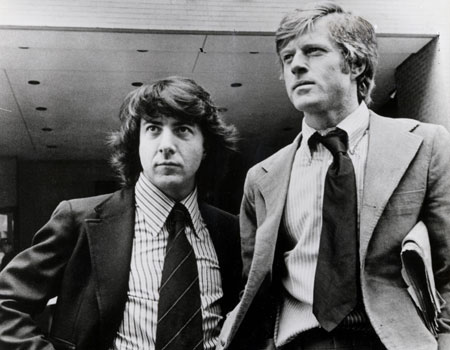
In Three Days of the Condor, he ran from the government. In All the President's Men, he brought down the government. And in Butch Cassidy and the Sundance Kid, well, the government brought him down.

Now Robert Redford is working with the government, as his Sundance Institute partners with the President's Committee on the Arts and the Humanities and other federal cultural organizations to promote cross-cultural dialogue via independent film.

From the Institute's press release:

Film Forward: Advancing Cultural Dialogue chooses a carefully curated group of 10 contemporary independent films, five American and five international, and invites the filmmakers to present their works in selected locations in both the United States and at American embassies and other venues abroad. Master classes, discussion panels, Q&As and other engagements between filmmaker and audience are programmed around the screenings in all locations, cultivating engaged dialogue, fostering appreciation of other viewpoints and developing new audiences for independent film.

It's eerie how many of my favorite topics are united in this story--cultural diplomacy, indie films and cross-cultural dialogue--as if it had been created for me in an experimental government lab. I like this idea, and not just because I'm and independent film junkie. This is a really savvy cultural diplomacy move--uniting a government objective to increase cross-cultural dialogue, a globally respected private organization and Robert Redford. What's not to love?